
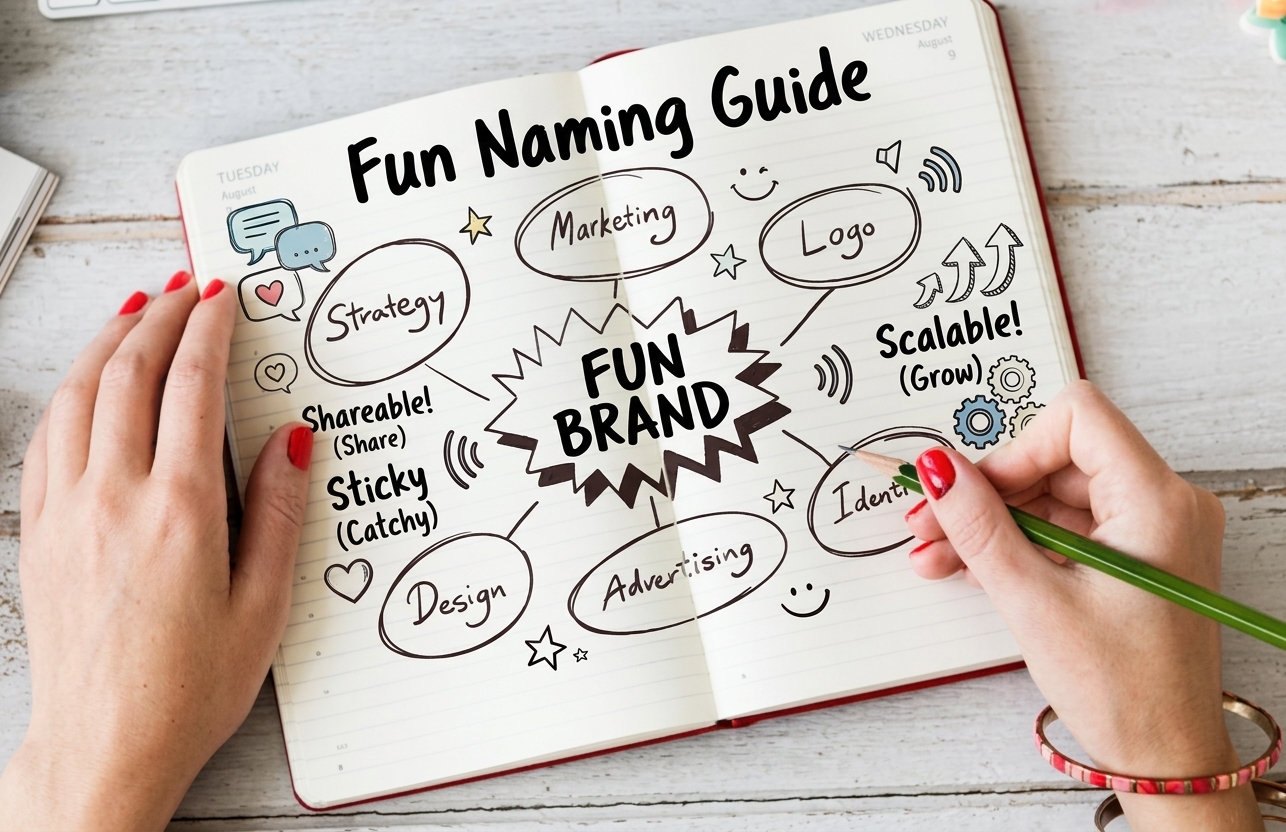
Fun naming is the strategic process of using playfulness, humor, double entendres, phonetics, and witty wordplay to create high-recall brand identities. A great fun name lowers customer acquisition costs by creating immediate emotional warmth, triggering natural word-of-mouth marketing, and sticking in human memory far longer than standard corporate labels.
Here’s where most founders get it wrong: they think a “fun name” is just a random pun slapped onto a logo.
In reality, memorable fun naming is an exact science. Drop the corporate dry spell. Let’s break down how playful branding works, explore top-tier name ideas across distinct vibes, and learn how to pick a name that actually scales.
The Master List: Fun Naming Ideas by Brand Persona
A great name needs context. Below are hand-curated fun name concepts categorized by brand energy, complete with their underlying psychological vibe and optimal industry fit.
1. Playful & High-Energy (Best for Fitness, Apps, Food & Beverage)
- WhamBam: Immediate punchy energy. Evokes speed, excitement, and instant satisfaction.
- SnapCrush: High-vibe, satisfying action verb combo. Fits gaming, snacks, or fast-paced software.
- FizzPop: Tactile, sensory phonetics. Perfect for sparkling beverages, event planning, or creative agencies.
- Zoomies: Taps into high-energy viral internet culture. Great for pet tech, kids products, or rapid delivery services.
- GiggleFuel: Pairs an emotional reward with driving action. Excellent for coffee brands, podcasts, or humor media.
2. Witty & Clever Puns (Best for Craft Goods, Local Services, Coffee Shops)
- Brewed Awakening: Classic double entendre that sets a clever tone for a morning coffee roastery.
- Lawn Order: A memorable twist on popular culture tailored for a high-end landscaping business.
- Pane in the Glass: Self-deprecating, witty, and instantly recognizable for window cleaning or repair services.
- Curl Up & Dye: A legendary hair salon classic that relies on phonetics to stay top-of-mind.
- Wok This Way: Rhythm and rhyme built right into an Asian fusion restaurant brand.
3. Cheeky & Irreverent (Best for Gen Z Brands, D2C Apparel, Cosmetics)
- Sass & Trash: Direct, unfiltered personality. Tailored for edgy street fashion or eco-conscious upcycling.
- Slayed: Modern slang leveraged for high-impact beauty, hair, or fashion lines.
- Zero Fluffs: Clear, anti-bullshit tone. Excellent for modern skincare or no-nonsense SaaS platforms.
- Naughty Nut: Playful, bold double-meaning that stands out in the crowded health food and snack aisle.
- Bite Me: Intentionally provocative. Works brilliantly for hot sauces, bold bakeries, or edgy dental startups.
4. Quirky & Minimalist (Best for Tech, Creative Studios, Consumer Gadgets)
- Boop: Short, cute, onomatopoeic, and effortlessly sticky. Ideal for pet apps or smart hardware.
- Noodle Labs: Blends everyday informality with technical capability. Great for R&D studios or AI tools.
- Blob: Anti-corporate, friendly geometry. Perfect for design software, creative studios, or clay goods.
- Snooze: Ultra-simple, relatable, and clear. Tailored for sleep-tech, mattresses, or relaxation drinks.
- Yumio: Adds a warm, expressive suffix to a simple sensory root word. Fits food tech and meal prep delivery.
The Psychology of Fun Naming: Why Playful Brands Win
Why do brands like Squatty Potty, Dollar Shave Club, or Liquid Death dominate ultra-competitive markets? It comes down to basic human neuroscience.
- Dopamine Processing: When a prospect understands a subtle joke or feels amused by a name, their brain releases dopamine. That positive chemical spark gets directly associated with your product.
- The Von Restorff Effect: Also known as the Isolation Effect, this psychological rule states that an item that stands out from its peer group is far more likely to be remembered. In a sea of boring, functional, or Latinate names (like Nexiant or LogiCorp), a fun name creates an instant visual and acoustic contrast.
- Lowering Resistance: Humorous and lighthearted names lower a consumer’s natural defensive filter against commercial marketing. It feels less like a sales pitch and more like an invitation to a joke.
Quick Reference: Fun Name Comparison Matrix
| Name | Linguistic Vibe | Psychological Trigger | Best Industry Fit |
| GiggleFuel | Energetic / Compound | Emotional reward + motivation | Coffee, Energy Drinks, Podcasts |
| Lawn Order | Pop Culture Pun | Pattern recognition + familiarity | Home Services, Landscaping |
| Boop | Onomatopoeia | Cuteness + simplicity | Pet Tech, Mobile Apps, Toys |
| Liquid Death | Radical Contrast | Cognitive dissonance + edge | Water, Apparel, Lifestyle Goods |
| SnackOverflow | Tech Parody | Industry insider humor | Developer tools, Tech catering |
4 Common Pitfalls to Avoid in Fun Naming
- Sacrificing Clarity for the Joke: If customers can’t tell what you actually do or sell, the joke costs you money. Always ensure your tagline or category descriptor anchors the name.
- Hard-to-Spell Phonetics: If a user hears your fun name on a podcast, can they type it cleanly into Google? Avoid overly bizarre spelling hacks (e.g., Phunnee Kutz) unless you own the primary redirects.
- The Aging Humor Trap: Tying your fun name to a short-lived viral meme or internet trend guarantees your brand will feel obsolete in 24 months. Stick to timeless humor, wordplay, or phonetic charm.
- Ignoring Global Meaning & Cultural Context: A lighthearted slang word in English might mean something offensive, crude, or bizarre in another major language. Always run international semantic checks before finalizing.
Strategic Selection Framework: How to Pick Your Winner
- Define Your Fun Boundary: Determine how playful your brand can actually be. A financial app can be witty (e.g., Cleo), but going full slapstick might erode trust.
- Test the “Podcast Rule”: Say the name out loud 10 times in standard conversation. Does it feel natural, or do you have to explain the spelling every single time?
- Check GEO & Search Accessibility: Search your potential name on Google and ChatGPT. Make sure you aren’t competing with a massive global entity or an existing viral meme.
- Secure the Digital Footprint: Don’t obsess over a pristine
.comif it costs $50,000. Fun names pair exceptionally well with creative modern TLDs (e.g.,.co,.xyz,.fun,.app) or action domains (e.g.,Get[Name].com). - Run a Clearance & Trademark Check: Verify trademark registries (like the USPTO) to confirm your playful name won’t trigger a cease-and-desist letter from a competitor in your class.
Frequently Asked Questions
What makes a name sound “fun”?
A fun name typically uses light consonants (like p, b, k, g), rhyming patterns, alliteration, onomatopoeia, or unexpected word combinations that subvert standard corporate expectations.
Can a serious B2B business use fun naming?
Yes. Modern B2B buyers are tired of dry corporate jargon. Companies like Mailchimp, BambooHR, and Gong proved that playful, memorable naming works exceptionally well in enterprise software.
How do I balance fun naming with trademark safety?
Because fun names often rely on everyday language, idioms, or puns, perform a thorough search on trademark databases (such as USPTO, EUIPO) to ensure the phrase isn’t already trademarked within your specific Nice industry classification.
